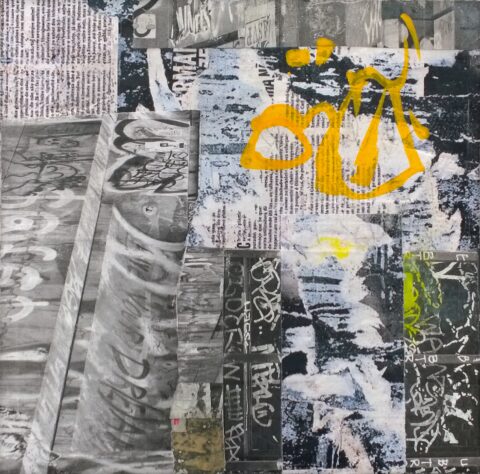
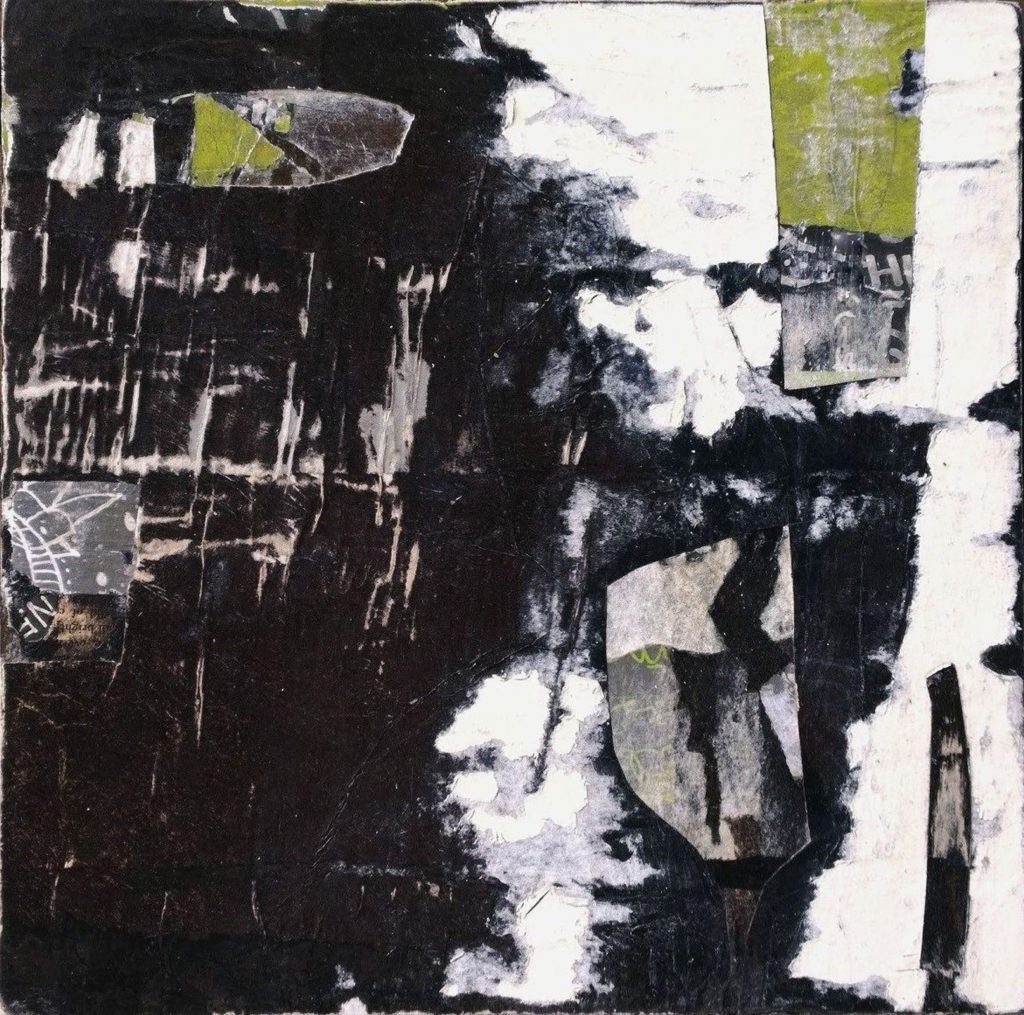
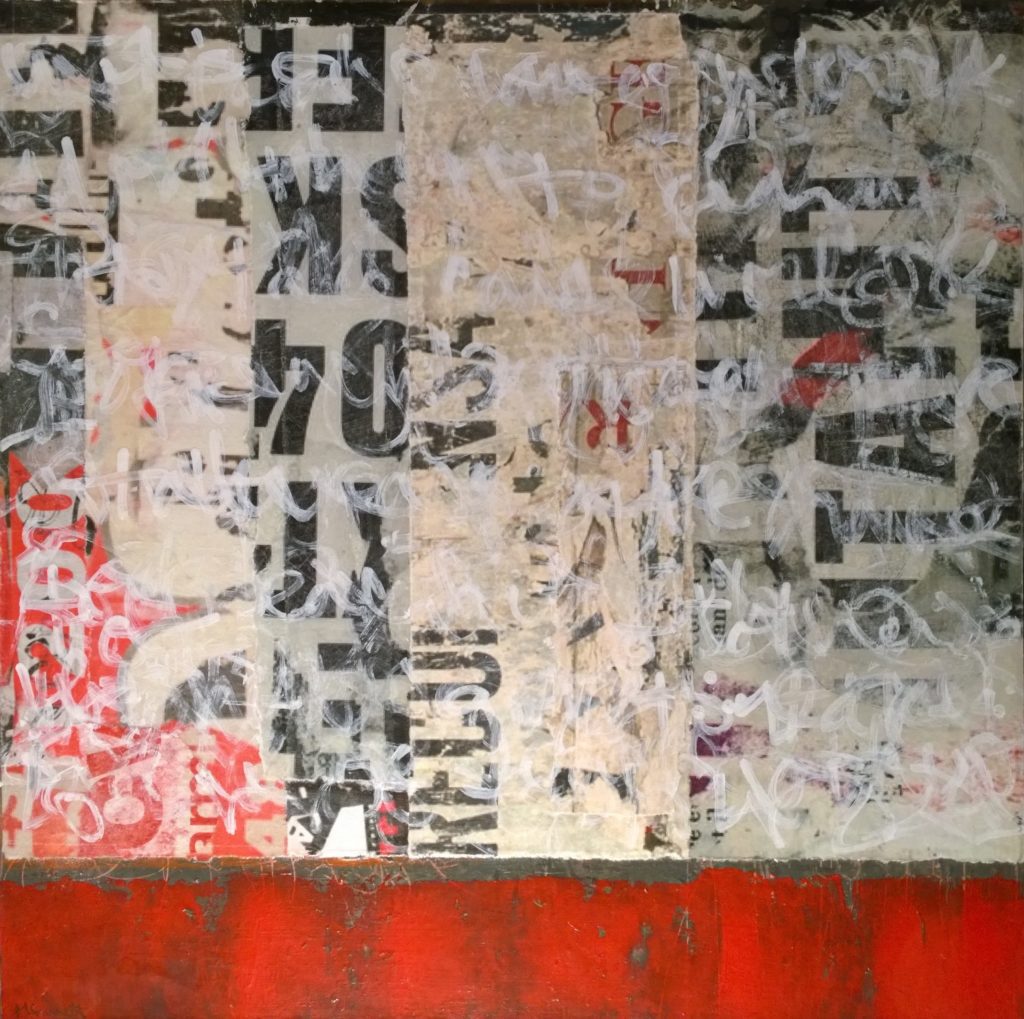

Industrial Strength connotes “extremely powerful, intense, durable, more concentrated than the standard brand.” In Garrett’s recent work, protests and prayers are woven into multiple layers of hand-painted papers. They also include stenciling, reduction techniques, and torn images from her archive, 30 years in the making, of street photography focused on chaotic urban environments. Demolished walls, raw graffiti, and gritty patterns all make their way into Industrial Strength.
A professional artist for 25 years, Garrett has a degree in Sociology from Eastern University in St Davids, PA. She has traveled and studied art across the country: oil and cold wax techniques in Wisconsin and Ghost Ranch, NM; encaustics and monotype printing in Santa Fe, NM; and painting at The Art Institute of Chicago, thanks to a merit scholarship. Garrett is represented by galleries in Vail and Santa Barbara and has collectors across the country. She paints full-time and teaches workshops in Santa Barbara, CA. For more information please visit www.mgarrettstudio.com.
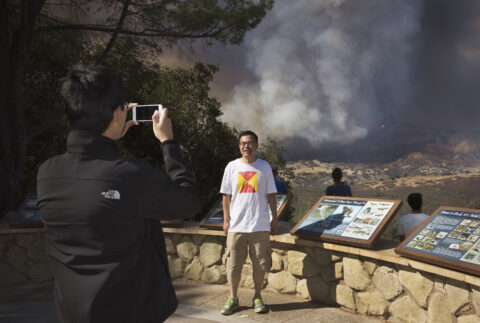
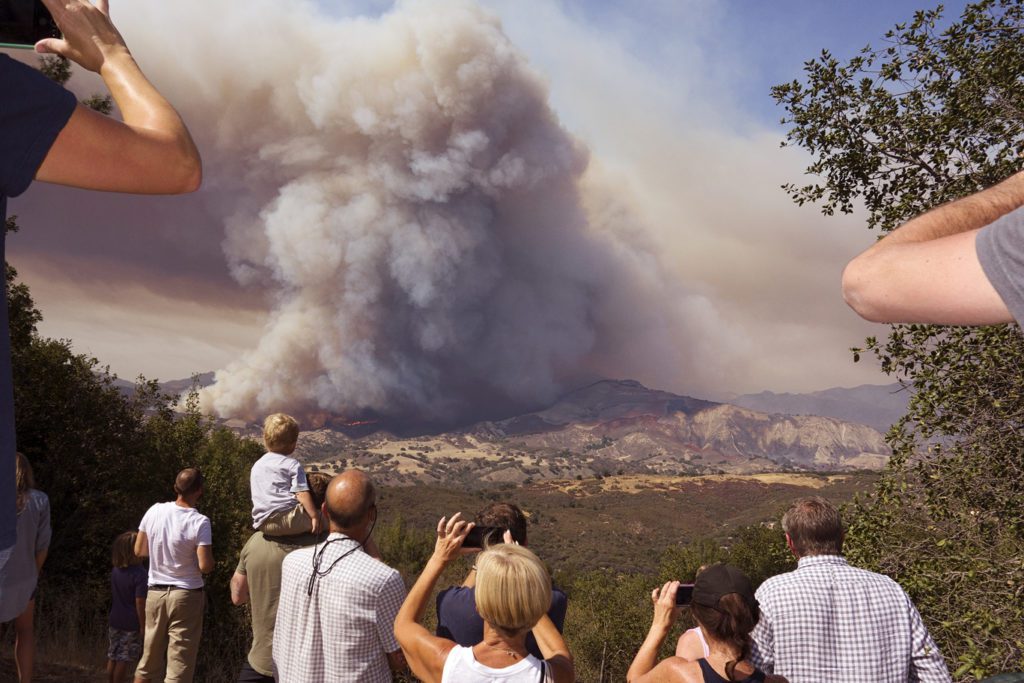
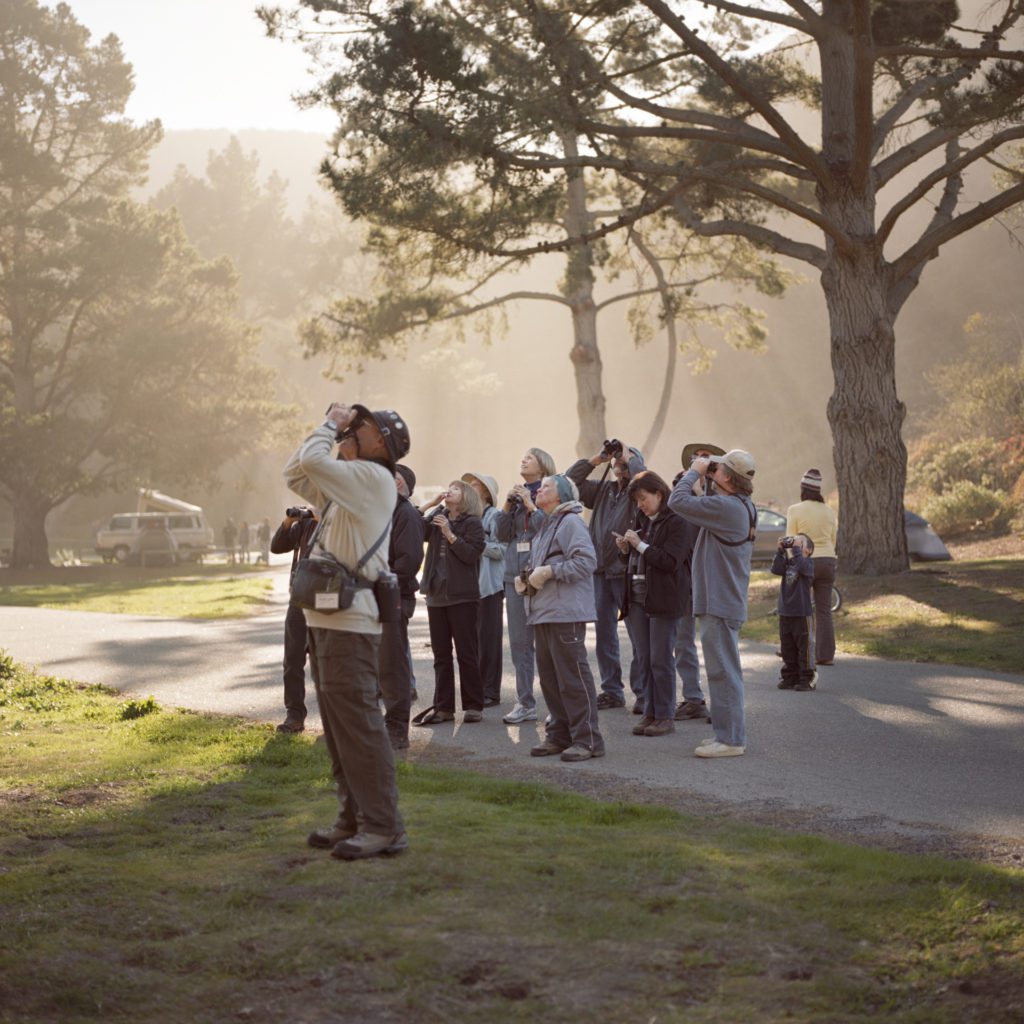
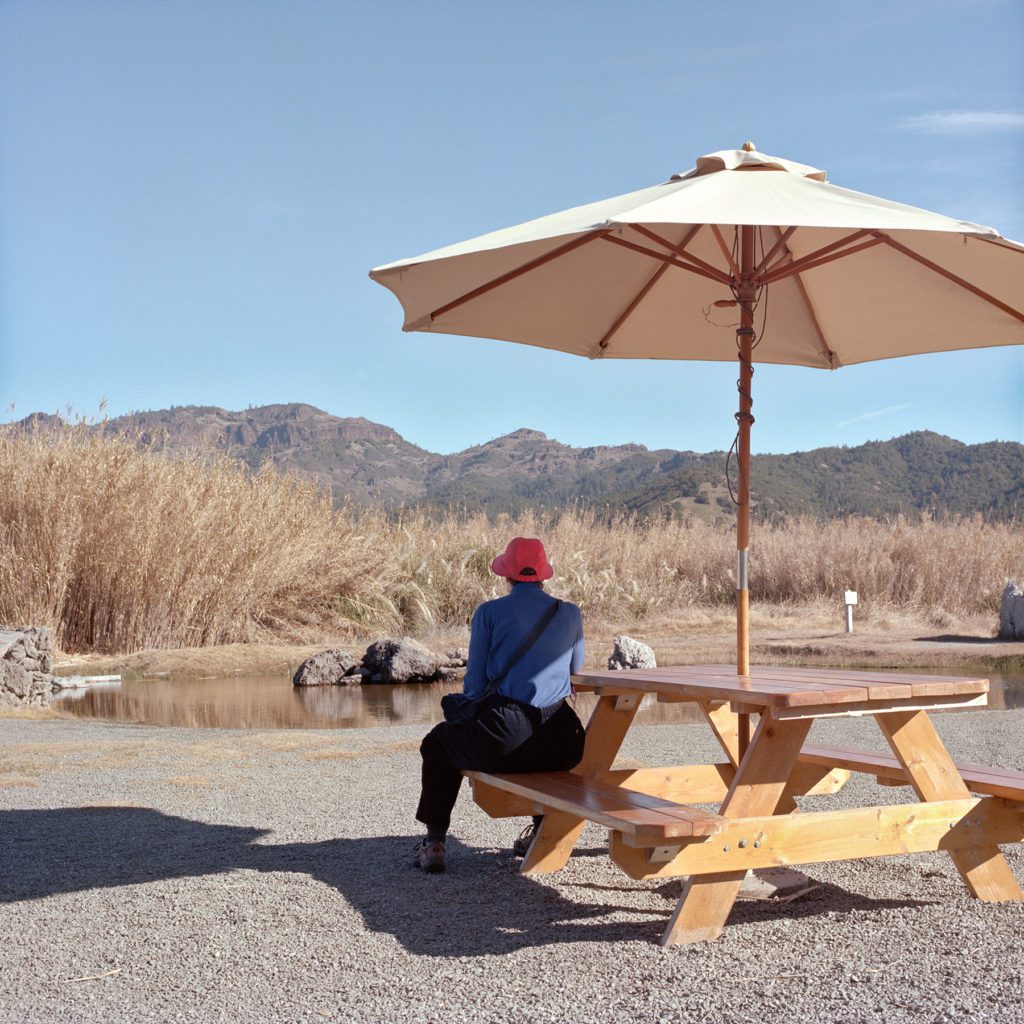
Observed / Observer is a collection of photographs concentrating on California land use and the relationships of individuals with the environment. Straka documents mundane and sublime aspects of the landscape, with a special focus on abandoned and industrial subjects. With the advance of smart phones, he has become intrigued by how ordinary people, situated in everyday surroundings, create unique tableaux and document it using their mobile devices.
Drawing inspiration at an early age from set design and film, specifically disaster and zombie films, Straka was led to search out and explore lost byways and dead ends throughout California, seeking images and scenes that imply unwritten, enigmatic narratives. “That set design of abandonment was a magnet for me. The left-behind shoe, a small pile of trash in an alley, a car left by the side of the road [they] all told stories….This was a different practice for me, trained as a photojournalist: to not include people to tell the story but to rely on the physical evidence instead.”
Within this time frame also came the rise of the cell phone as a means of photography: “It was hard not to include that in my photographs as it was multiplying so fast. It became a counter balance to my increasing body of work of abandonment–people interacting with their surroundings like never before. Living through your screen and sharing it with the world has become the norm and I felt it was necessary to include this in my documentation.”
Matthew Straka is a Santa Barbara native. During the past twenty-six years he has worked as a photojournalist, a commercial photography assistant, and chiefly as a color lab technician. He studied photography at the Art Institute of Fort Lauderdale and journalism at Santa Barbara City College. His photographs have been exhibited in various solo and group exhibitions throughout California including: Celestial Bodies, The Essential Worker, Pilgrimage and Notable Rejects. He currently works at Grace Design Associates, a landscape design company in Santa Barbara.
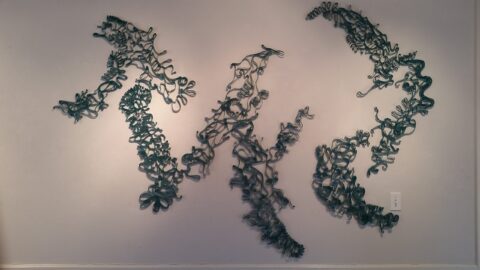
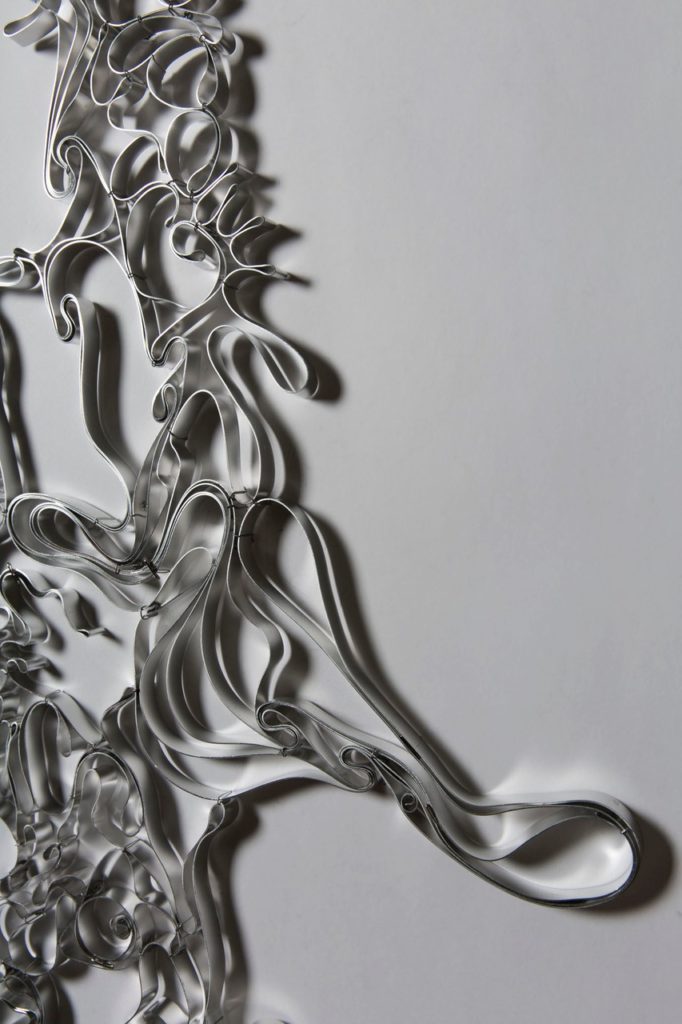
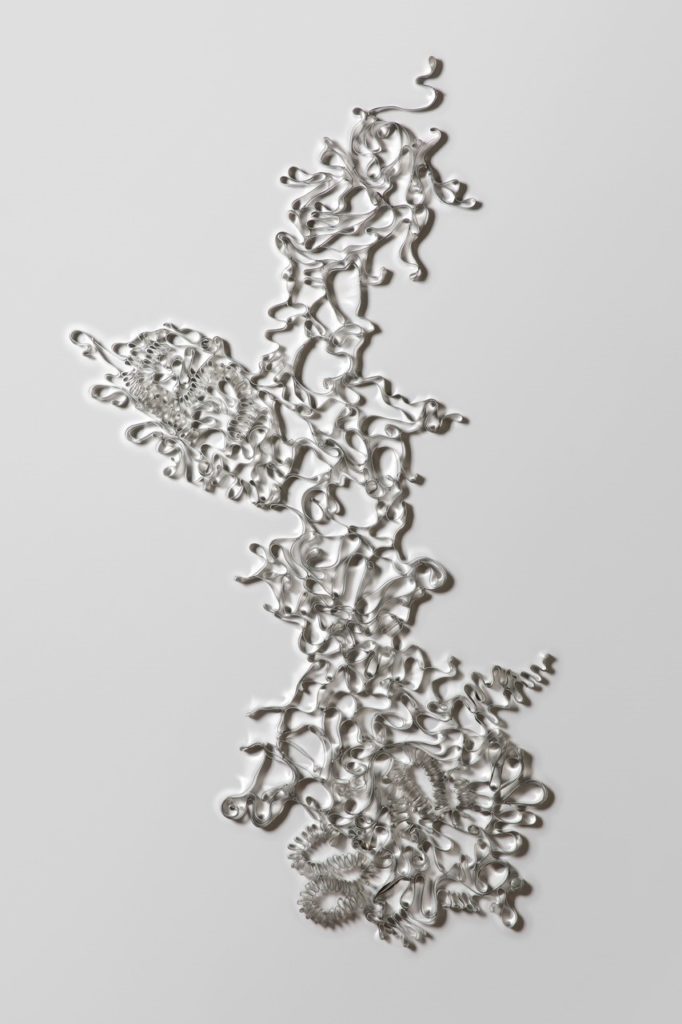
The exhibition consists of innovative wall sculptures made with industrial aluminum and colorful paintings formed with synthetic liquids. “Stretch” refers to the uncanny malleability of Flanagan’s various materials and to her unique experiments, which are designed to provoke neural surprises, both tactile and visual, while evoking a range of feelings.
Festoons, Flanagan’s aluminum wall sculptures, have their beginnings at a New England mill that custom rolls and slices aluminum into strips—typically, for a minimum order of 13,500 linear feet. Based on her prototypes, metallurgists at the mill provide technical assistance on alloys, temper, gauge, edge, and finish.
More mercurial are Flanagan’s painting projects made with synthetic coatings of many colors, transformed by casting, pouring, and curing, then playfully layered into intriguing compositions that challenge the formalities of traditional paintings and archival paint formulas.
Flanagan lives and works in downtown Santa Barbara, overlooking the new Lagoon District and equidistant to East Beach, trails, and art venues. “Visitors to my studio tell me my outdoorsy life shapes my art making. Sounds right. I ocean swim, grow food, and make art–my favorite kinds of work/play, all very sensory. Immersed in the cold Pacific, an unpredictable wilderness, I’m awed, humbled, and overwhelmed. In my garden, I collaborate with my plants, as I prune, feed, and coax them to bear fruit. In my outdoor studio, I pour, squeeze, and bend industrial materials–mimicking the gorgeous sinuosity of nature–as I pretend to control the process. In fact, I’m always surprised by the results, for better or worse, and that’s the condition I seek: hard-won suspense with a chance of joy.”
Flanagan holds a Masters of Architecture from Yale University, a B.A. from the University of Pennsylvania, and a Certificat in sculpture from ENSAD (École Nationale Supérieure des Arts Décoratifs, in Paris). For over thirty years, she has worked as an independent writer and product designer while making her own art. After her early years as an architectural designer in San Francisco and L.A., Flanagan was invited to write about design and architecture for The New York Times and Metropolis Magazine. She has contributed to a dozen national publications and published two books on design. Since 2002, Flanagan has designed products for the MoMA’s Design Store (NYC).
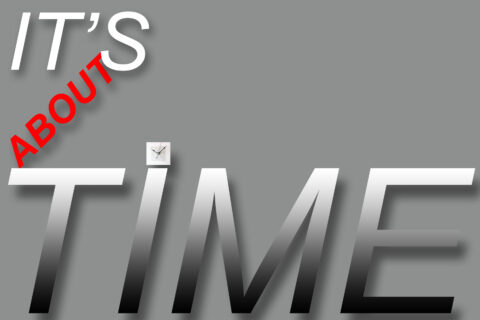
A kinetic installation underscoring the illusive nature of time
Time is a square peg struggling to fit into an elliptical universe. Man created it. We live by it.
IT’S ABOUT TIME is a visual metaphor demonstrating how our perception of time,with its accordion-like expansion and contraction, is constantly changing as it systematically goes around in circles.
Like the Earth spinning every 24 hours in its yearly rotation around the sun, a clock with hands follows the earth’s movement as it makes its rounds. Earth and clock move in sync giving us a poetic connection to the cosmos and the space-time continuum where thoughts of time travel, memory and déjà vu boggle the mind.
The notion of time begins in our guts then moves to our heads before entering the space of our lives. Like time itself, the phrase ‘it’s about time,’ is elastic. It’s most often used with exasperation and weary anticipation behind it.
The installation ITS ABOUT TIME goes further and gives us time as audio/visual poetry.
Time enters our lives in countless ways: music translates it into a signature, while science continues to examine how it affects our perception of life itself. Ideas about time changed forever when Einstein’s mind-bending theory of relativity led to the concept that, in the physical universe, space and time as a mathematical model join together to form a single idea called a continuum.
The phrase ‘time is a man made illusion’ questions the actual existence of time. It’s hand written on the majority of the 80 repurposed 4×4 inch square white faces. Several layers of iridescent paint partly obscure the underlying message.
The nervous energy coming from the clocks’ unevenly paced mechanical movements echoes life where perception of time is dependent on each individual’s emotional state. It’s ‘tempus fugit’ when we’re happy and ‘will this never end’ when we’re not.
Uniformity provides the structural matrix in which each clock runs at its own pace: a metaphor for how our individual lives function within a societal framework. The ticking hands bring the installation to life. In addition, the reflective paint creates a subtle play of light, adding multiple kinetic shifts to the piece.
Eventually each one of these battery-run clocks will start showing signs of fatigue, of running out of energy and eventually stopping. A kind of controlled chaos sets in. In the final analysis not one of them will be on time.
‘time is a man made illusion’
The largest grouping in the overall installation, composed of 60 signed and numbered small clocks, evenly divided and hanging in regimented order on opposite walls of the gallery where they tick away time at different rates, a nod to our own structured lives.
‘night and day,’
A series of 6 [six] 8 inch square pendulum clocks, half with house screens obscuring their faces, remind us that light and darkness create the shades of our lives.
‘now’
Four small clocks, with small triangular pendulums, tick the seconds away as a reminder that now is the only time that comes with a guarantee.
‘face to face’
Four mirrored pendulum clocks keep a second-to-second tempo as they put us face-to-face with the here and now.
‘fragile’
Two chipped fluorescent-orange-mirrored-pendulum clocks tick fragile seconds away.
‘hands’
A three-dimensional assemblage plays with the interplay between gravity and time. The piece is held together by nothing but magnetic force and gravity.
‘TIME LINES’
A 9 minute 29 second video gives a peek into how our language is filled with emotionally charged references to time. Two sung and seemingly unrelated phrases repeat themselves over and over as a metaphor for nature’s cyclical movements.
RT Livingston
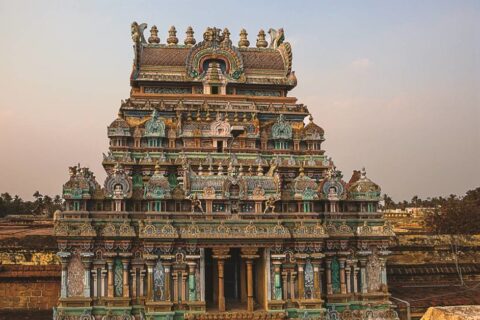

For over 25 years Sylvia Abualy has combined her passion for photography and travel into a prolific career as a travel photographer. She has photographed on five continents with a focus on people and their cultures. India became a favorite destination and the architecture there—the science, design, composition, color and building materials used through the centuries—emerged as her dominant interest. As she edited and researched the subjects of her numerous photographs, the styles, architects, and especially the people stood out as foci. Her vibrant photographs encourage viewers to savor gorgeous images of Indian architecture, to contemplate the complex history and culture of these places, and to appreciate the people who live there.
Abualy started her photographic career using film but evolved to digital, using a Canon EOS 5D Mark 2. She does all of her own printing on an Epson P800, skillfully combining her artistic eye and expertise in the digital realm to create unforgettable prints. Inspired by the words of Ansel Adams “The negative is the equivalent of the composer’s score, and the print is the performance,” she believes that in today’s world, a digital image is the equivalent of a negative
Her self-published book, ENCOUNTERS, contains photographs of people around the world. For more information, visit: SylviaAbualyPhotography.thisistap.com.
“Every photograph has a story.”


Into Nothing by Tom Pazderka is a momentary foray into the darker side. The darker side is to be understood not as something necessarily evil for its own sake, but ‘the’ something as an obverse of light. In the truest sense of the nature of humans and nature itself, one cannot have light without the dark, positive without its negative aspects. The potential in fire as the ultimate destructive force hides within it its polar opposite – that of the regenerative potential of what is left behind. In creating a void, fire nonetheless immediately fills the space upon which it acted. As Gaston Bachelard observed, “It shines in Paradise. It burns in Hell.” Fire is therefore ‘the’ conflicting force about which, to this day, we know very little. It is both good and evil. Pazderka negotiates the subject of fire via depictions of local wildfire smoke, clouds and portraits of in/famous philosophers, artists and cabin dwellers, painted and drawn into burned wooden substrates treated with ashes and charcoal. Ghostly images emerge, subtle and soft, yet quietly disturbing at the same time.
Tom Pazderka is an interdisciplinary installation artist, painter, sculptor, teacher and writer. He holds an MFA from the University of California Santa Barbara where he was a Regents Fellow and is currently the Artist in Residence for the 2016/2017 academic year. He is a lecturer of art at Allan Hancock College in Santa Maria, CA. Half Czech and half American, the son of working class immigrants, he moved to the US at the age of 12 shortly after the collapse of the Eastern Bloc. His works have been exhibited at UCSB’s AD&A Museum, Asheville Art Museum and Cameron Art Museum in NC, Parasol Projects, NYC, Trafo Gallery in Prague, and Pink Dog Creative and the Push Gallery in Asheville, NC. The recipient of numerous awards including the Howard Fenton Award for Painting, residencies, his works have been reviewed and profiled in many publications including New American Paintings and Daily Serving.
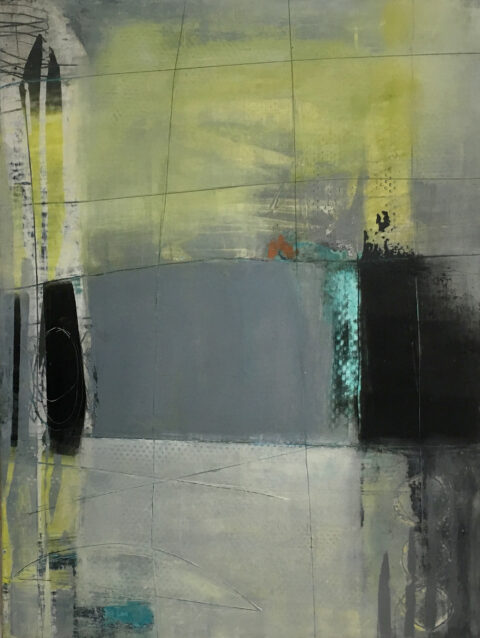
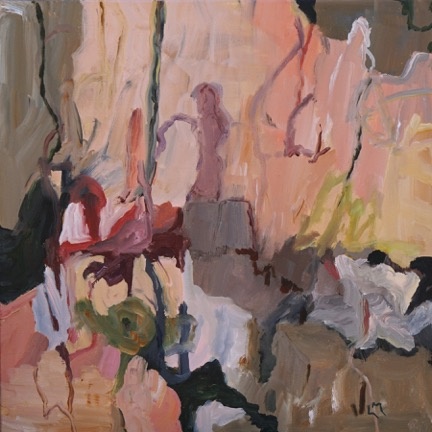
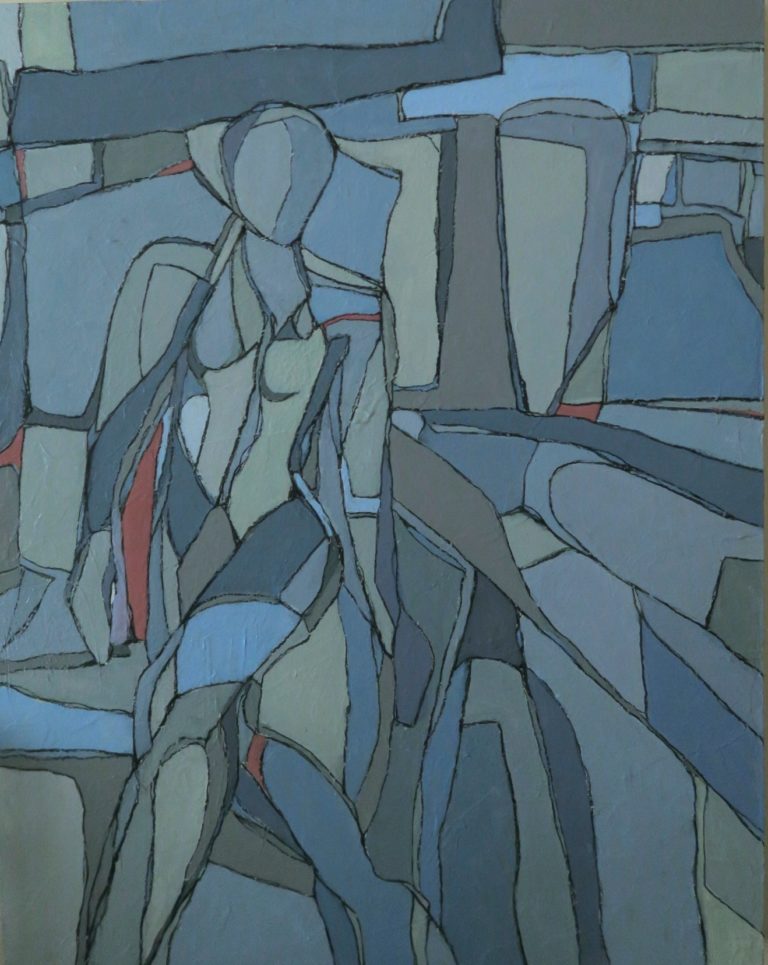
The Abstract10 group has been meeting monthly since 2010 to cultivate their work as contemporary abstract artists. The meetings are structured with art-related news, critiques, and support in developing new work. With diverse backgrounds, inspirations, styles, and mediums, these artists offer a view of the synergy engendered by the group gathering together on a regular basis and interacting through the common bond of abstract art.
Members of the group are Penny Arntz, Pat Calonne, Peggy Ferris, Madeline Garrett, Diane Giles, Bay Hallowell, Marilee Krause, Laurie McMillan, Julie Young, and Michelle Zuzalek. These ten artists have backgrounds in graphic design, business, teaching, art museums, and psychotherapy. Using a variety of techniques and mediums, their abstract art is inspired by nature, architecture, the figure, the subconscious, memory, gesture, and geometry.